
AI tools for tech job seekers are specialized software solutions that use machine learning and automation to optimize resumes, match candidates to open roles, and automate applications. The tech job market is shifting fast. 64% of 2026 security job listings require AI, machine learning, or automation skills. That number signals a clear reality: the tools you use to search for a job now need to reflect the skills employers expect you to have on the job. This guide covers the core features, top use cases, and data privacy considerations every tech professional needs to know before adopting AI career tools.
1. What are the essential features of AI job search tools for tech professionals?
The best AI job search tools share a common set of features that directly address the needs of IT and cybersecurity candidates. Understanding these features helps you evaluate any platform before committing your data and time.
- ATS resume optimization. AI tools score your resume against applicant tracking system (ATS) criteria and rewrite weak sections before submission.
- Skills-based job matching. Matching algorithms filter roles by specific skills such as cloud security, detection engineering, or DevSecOps.
- Automated cover letter generation. Tools pull keywords from job descriptions and generate tailored cover letters in seconds.
- Interview preparation. AI-driven mock interviews provide feedback on answer structure, keyword coverage, and delivery.
- Application tracking dashboards. Centralized dashboards show application status, response rates, and follow-up reminders.
- Privacy and data controls. Reputable platforms let candidates view, export, and delete their data on demand.
Pro Tip: Before signing up for any AI job platform, check whether it offers a data deletion option. Platforms that bury this setting often retain your data for model training long after you stop using them.
2. How AI resume builders create ATS-ready profiles for tech roles

AI resume builders do more than fix formatting. Advanced tools operate on multi-agent pipelines that score resumes on ATS compatibility and impact, then rewrite weak bullet points until a quality threshold is reached. One open-source implementation targets an ATS compatibility score of 82 out of 100 before the candidate sees the final draft. That iterative process produces a materially stronger document than a single-pass grammar check.
For tech roles specifically, these builders recognize domain-specific keywords: SIEM platforms, zero-trust architecture, Kubernetes, and SOC workflows. A generic resume builder will not flag the absence of "MITRE ATT&CK" on a threat analyst resume. A tech-focused AI tool will.
Cover letter generation follows the same logic. The tool analyzes the job description, extracts required competencies, and maps them to your experience. The output is a draft that mirrors the employer's language, which increases the chance of passing automated screening.
Privacy-conscious candidates should look for self-hosted or locally deployed resume tools. These options keep your resume data off third-party servers entirely, which matters when the document contains sensitive employment history or security clearance references.
3. How AI platforms support tech job seekers with job matching and automation
AI job matching platforms run continuous searches across multiple job boards and company career pages, then surface roles that match your defined skill set. For IT career growth, this means you stop manually refreshing job boards and start receiving a curated feed of relevant openings.
One in three job seekers now use AI tools for resume creation or optimization. Platforms have responded by building AI evaluation tools on the employer side as well, creating a situation where both parties use AI simultaneously. Understanding this dynamic helps you calibrate how much you rely on automation versus direct outreach.
Auto-apply features carry real risks alongside their efficiency gains. When a bot submits 200 applications with minimal customization, it can damage your professional reputation with hiring managers who notice the generic content. The better approach is to use automation for discovery and initial filtering, then apply manually to your top 10 to 15 targets with fully tailored materials.
- Evaluate matching algorithm transparency. Ask whether the platform explains why a role was surfaced or rejected.
- Check consent language carefully. Automated screening tools may profile your behavior and share that data with employers.
- Set application volume limits. Most platforms allow you to cap daily auto-applications to maintain quality control.
- Review data retention policies. Confirm how long the platform stores your search history and application data.
Pro Tip: Use AI matching platforms to build your target company list, then visit each company's careers page directly. Direct applications bypass aggregator noise and often reach hiring managers faster.
4. Data privacy considerations in AI-powered tech job search tools
Data privacy is the most underestimated risk in AI-assisted job searching. Nearly 40% of job seekers fail to delete their profiles after a job search ends, leaving personal data exposed to automated profiling indefinitely. That exposure is not theoretical. Platforms use behavioral data, including search patterns and application history, to build candidate profiles that may be shared with or sold to third parties.
Before consenting to any AI-assisted reference check or background screening, candidates should ask: What specific data is collected? How is it scored? Who receives the results? How long is it retained? These questions are not optional. They are the minimum standard for informed consent under GDPR and equivalent frameworks.
AI recruiting tools that conduct automated scoring with significant hiring effects are often subject to a Data Protection Impact Assessment under GDPR and UK GDPR. Most HR teams skip this step. As a candidate, you have the right to ask whether a DPIA was completed for any AI tool used in your evaluation.
AI recruitment tools often retain applicant data indefinitely for model training unless vendors have explicit deletion schedules in place. Typical deletion schedules span six months after the recruitment process ends. Ask for this policy in writing before submitting your application through any AI-enabled platform.
AI algorithms in recruitment can perpetuate bias and must include human review to avoid solely automated decisions that are legally challenged under EU law. If you receive a rejection with no explanation, you have grounds to request a human review of the decision under applicable data protection law.
5. Best practices for using AI tools to grow your IT career
AI tools produce better results when candidates use them with a clear strategy rather than as a passive shortcut. The following practices apply directly to tech and cybersecurity job seekers.
Tailor your AI-enhanced resume for each role category. A cloud architect resume needs different keyword density than a penetration tester profile. AI tools can handle this variation, but only if you give them accurate input about your target role.
Senior analyst roles directing AI are projected to grow 40% over three years as the traditional SOC structure collapses into fewer, higher-skill positions. That shift means your resume needs to reflect AI governance and oversight competencies, not just technical execution skills.
Monitor AI tool outputs critically. AI resume writers occasionally hallucinate job titles, inflate metrics, or insert keywords that do not match your actual experience. Every AI-generated document requires a manual review before submission.
- Update your skills profile quarterly. AI matching tools rank candidates partly on recency of skill endorsements and certifications.
- Use AI for personal branding. LinkedIn headline generators and summary writers can sharpen your profile's keyword alignment without replacing your authentic voice.
- Maintain direct networking in parallel. AI tools increase application volume. Human relationships increase application quality and referral rates.
- Select tools aligned with your career stage. Entry-level candidates benefit most from ATS optimization. Senior candidates benefit more from targeted matching and direct recruiter access.
For a deeper look at how AI is reshaping the search process for IT professionals, the AI job search guide from Plucktalent covers cybersecurity-specific strategies in detail.
Pro Tip: Keep a plain-text version of your resume alongside your AI-optimized version. Some older ATS systems strip formatting and misread tables or columns, causing your application to fail before a human ever sees it.
Key takeaways
AI tools for tech job seekers deliver the most value when candidates combine ATS optimization, targeted job matching, and strong data privacy practices rather than relying on any single feature.
| Point | Details |
|---|---|
| ATS optimization is foundational | AI resume builders target compatibility scores above 80 before finalizing your draft. |
| AI skills are now required | 64% of 2026 security job listings require AI, ML, or automation competencies. |
| Auto-apply carries risk | Use automation for discovery, then apply manually to top targets with tailored materials. |
| Data privacy demands action | Delete inactive profiles and verify vendor data deletion schedules before consenting. |
| Human review remains necessary | AI-generated resumes and decisions both require manual checks to catch errors and bias. |
What I have learned after watching AI reshape the tech job market
The most common mistake I see tech professionals make is treating AI job search tools as a replacement for strategy. They run auto-apply bots, collect 300 rejections, and conclude that the market is broken. The market is not broken. The approach is.
AI tools are genuinely useful for the mechanical parts of job searching: formatting, keyword alignment, and initial screening. They are not useful for the parts that actually close offers: relationships, demonstrated judgment, and a clear narrative about why you are the right person for a specific role. Those elements still require human effort.
The data privacy angle is where I think most candidates are dangerously uninformed. Submitting your resume through an AI-enabled platform is not the same as emailing it to a recruiter. You are potentially consenting to behavioral profiling, automated scoring, and indefinite data retention. The AI reference check privacy checklist from Venture Lab is one of the clearest resources I have seen for candidates who want to ask the right questions before consenting.
The candidates who use AI tools well treat them as a first pass, not a final answer. They let the AI handle keyword optimization and job discovery, then invest their real energy in the 10 roles that actually fit. That ratio, broad automation plus narrow focus, is what separates a three-month search from a nine-month one.
— Diego
Plucktalent connects tech candidates directly with hiring managers
Plucktalent combines 17 years of IT and cybersecurity recruiting experience with Plucky AI, a dedicated job search co-pilot built specifically for tech professionals. The platform does not route candidates through generic job boards. It connects them directly with hiring managers at companies actively recruiting for their specific skill sets.
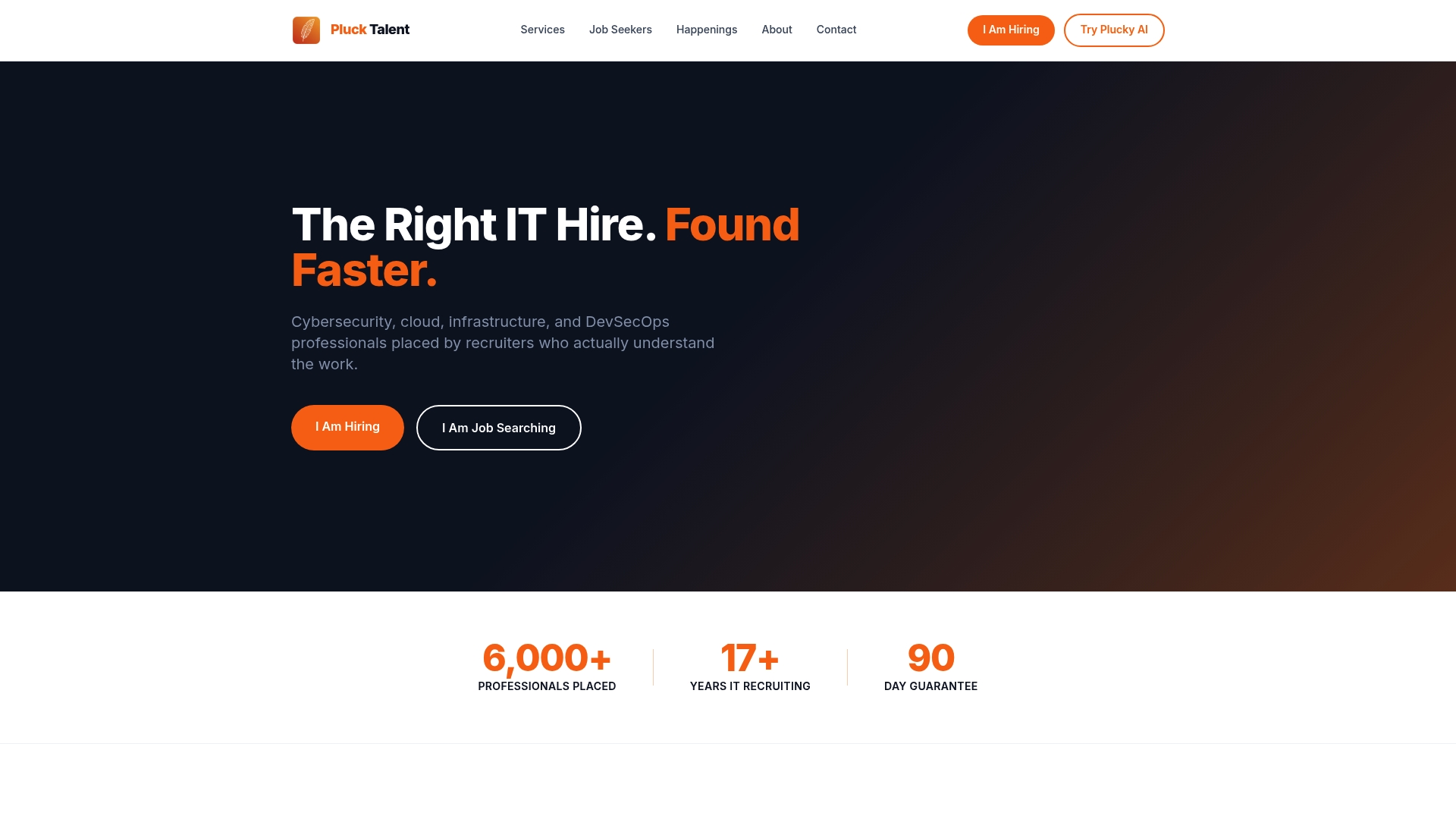
For candidates who are tired of submitting ATS-optimized resumes into a void, Plucktalent's approach is direct and measurable. Profiles are tailored, applications are targeted, and the pipeline moves. The job seeker platform is built for IT and cybersecurity professionals who want to stop wasting time on applications that go nowhere. You can also review the full range of career services Plucktalent offers for tech professionals at every career stage.
FAQ
What are AI tools for tech job seekers?
AI tools for tech job seekers are software platforms that use machine learning to optimize resumes, match candidates to relevant roles, and automate application tasks. They are designed to improve visibility with ATS systems and reduce the time spent on manual job searching.
How do AI resume builders improve ATS compatibility?
AI resume builders use multi-agent pipelines to score and rewrite resumes iteratively until they meet a target ATS compatibility threshold, often around 82 out of 100. They also insert domain-specific keywords relevant to tech and cybersecurity roles.
Why does data privacy matter in AI job search tools?
Nearly 40% of job seekers leave profiles active on job platforms after their search ends, exposing personal data to automated profiling. Candidates should verify data deletion policies and ask whether AI recruiting tools have completed a DPIA before consenting to automated screening.
What AI skills do tech employers require in 2026?
64% of 2026 security job listings require AI, machine learning, or automation skills. Senior analyst roles that direct AI systems are projected to grow 40% over three years, making AI governance a core competency for cybersecurity professionals.
Should tech job seekers use auto-apply features?
Auto-apply features work best for initial job discovery and filtering, not for final submissions. Sending highly customized applications to a focused list of target roles produces better results than submitting generic applications at high volume.