
A recruiter relationship is a long-term, trust-based professional connection between a candidate and a recruiter that extends well beyond filling a single job opening. For IT and cybersecurity professionals, understanding what is a recruiter relationship means recognizing that the best recruiters function as career advisors, not just resume forwarders. This connection is built through consistent communication, honest goal-sharing, and mutual value. Candidate Relationship Management (CRM) systems now formalize this process, allowing recruiters to nurture candidates for months or years before the right role appears. The result is faster placements, better job fits, and access to opportunities that never reach a job board.
What is a recruiter relationship vs. transactional recruiting?
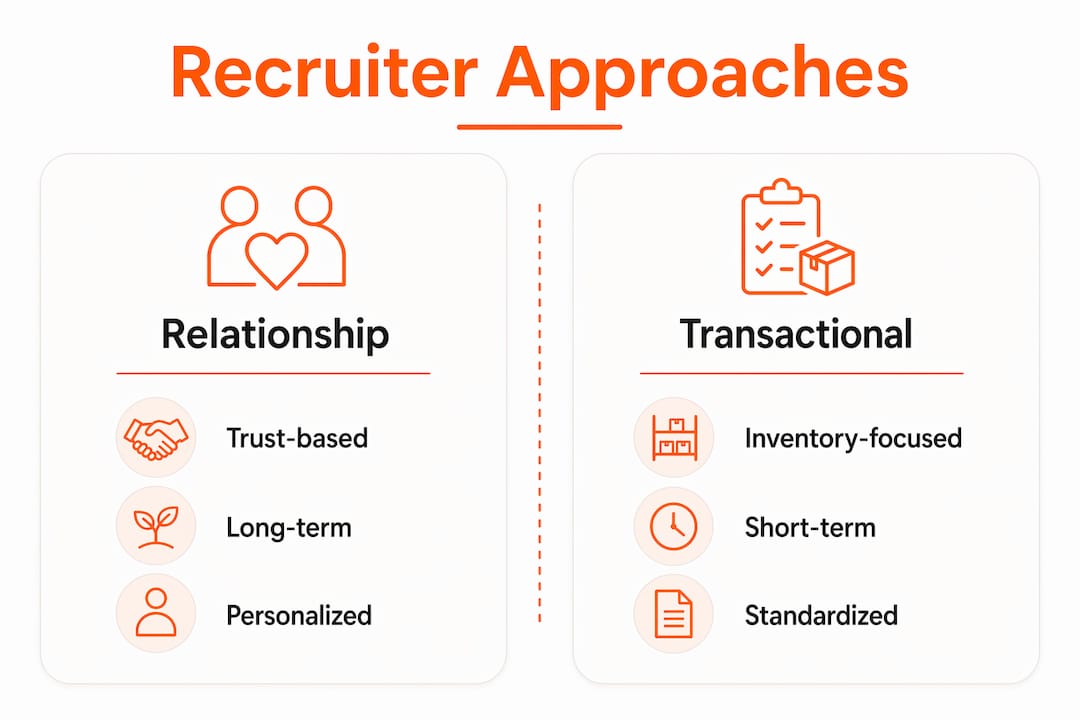
Transactional recruiting treats candidates as inventory. A recruiter receives a job order, searches a database, submits resumes, and moves on. The candidate is a means to a fee, not a person with a career trajectory. Relationship recruiting is a mindset shift, positioning recruiters as trusted advisors who provide market insights and personalized guidance over time.

The difference shows up in outcomes. Recruiters who build genuine connections with both candidates and hiring managers achieve a 95% placement-to-offer rate versus 60% for those focused only on sourcing. That gap is not a minor statistical variation. It reflects the real influence a well-connected recruiter carries when advocating for a candidate inside a hiring process.
For IT and cybersecurity job seekers, this distinction matters because the field moves fast. A transactional recruiter submits your resume to five companies and waits. A relationship recruiter tells you which cloud security team just lost two engineers, which CISO is rebuilding a SOC, and what salary range is realistic in your market right now. Recruiters gain early market intelligence through daily interaction with hiring managers and candidates, and that intelligence flows to the candidates they trust.
- Transactional recruiters prioritize speed and volume over candidate fit.
- Relationship recruiters share salary trends, team dynamics, and role context.
- Relationship recruiting generates repeat placements and referrals, not one-time transactions.
- Candidates in a relationship model receive honest feedback, not silence after a rejection.
Pro Tip: When a recruiter calls you about a role, ask what they know about the hiring manager's priorities. A relationship recruiter will have a real answer. A transactional recruiter will read you the job description.
What is candidate relationship management (CRM) and how does it work?
Candidate Relationship Management, or CRM, is the system and practice recruiters use to maintain ongoing contact with candidates between active job searches. It is not the same as an Applicant Tracking System (ATS). ATS manages active hiring workflows, tracking applications and interview stages for open roles. CRM nurtures talent over time, keeping candidates engaged even when no immediate opening exists.
The practical difference matters for candidates. When you apply through a job board, you enter an ATS. You are evaluated for one role, and if you do not get it, the connection often ends. When a recruiter adds you to a CRM, you become a long-term asset. CRM programs reduce cost-per-hire and time-to-fill by enabling passive candidate nurturing, sometimes for up to 18 months before a hire occurs.
Recruiters using CRM tools engage talent pools through targeted outreach, enriched candidate profiles, and regular check-ins. For a cybersecurity professional, this means a recruiter who placed you in a penetration testing role two years ago still has your updated profile, knows your current certifications, and thinks of you first when a red team lead position opens. This engagement leads to better candidate matches and reduced hiring costs for companies, which is why tech-focused firms invest in CRM infrastructure.
| Feature | ATS | CRM |
|---|---|---|
| Primary purpose | Manage active job applications | Nurture candidates over time |
| Candidate status | Active applicant for a specific role | Long-term talent pool member |
| Engagement type | Reactive, triggered by application | Proactive, ongoing outreach |
| Outcome focus | Fill current opening | Build future hiring pipeline |
| Candidate benefit | Considered for one role | Considered for multiple roles over time |
How can IT and cybersecurity job seekers build recruiter relationships?
Building a strong recruiter connection starts before you need a job. The candidates recruiters call first are the ones who stayed in contact, shared updates, and communicated clearly about their goals. Here is how to build that standing in the IT and cybersecurity market.
-
Be specific about your goals. Tell recruiters exactly what you want: remote-only, specific tech stacks, minimum compensation, and deal-breakers. Vague candidates get vague opportunities. A recruiter who knows you will not relocate and only works in AWS environments will not waste your time or theirs.
-
Follow up consistently but professionally. A brief check-in every 60–90 days keeps you visible without becoming a burden. Reference something specific, such as a certification you just completed or a shift in your job search timeline. Personalized, low-pressure communication sustains recruiter relationships and increases positive outcomes.
-
Use warm introductions whenever possible. Warm introductions to recruiters have a 300% higher response rate than cold outreach. Ask a former colleague, a LinkedIn connection, or a hiring manager you worked with to make the introduction. That one step changes how a recruiter perceives you from the first conversation.
-
Engage with hiring managers directly and professionally. Building relationships with IT hiring managers is a parallel track to recruiter networking. Comment on their LinkedIn posts with specific, informed observations. Ask a thoughtful question about a technical challenge they mentioned. This builds your professional reputation before any job conversation starts.
-
Treat the recruiter as a professional peer. Share honest feedback after interviews. Tell them when a role is not the right fit and why. Recruiters remember candidates who give them useful information because it helps them do their job better.
Pro Tip: Avoid asking for a job immediately when engaging senior hiring managers on LinkedIn. Intelligent commentary on their posts sends a peer-level competence signal that a cold connection request never will.
Why do recruiter relationships unlock the hidden IT job market?
A large share of IT and cybersecurity roles are filled before they are ever posted publicly. Companies promote internally, tap trusted recruiters, or hire from referral networks before a job description reaches LinkedIn or Indeed. Candidates without recruiter connections never see these roles.
Recruiters with strong hiring manager ties have direct access to this pipeline. Recruiters who start with hiring managers' needs instead of random candidate sourcing fill roles faster and with better fit. When a CISO calls a recruiter at 9 a.m. about a cloud security architect opening, the recruiter's first call goes to the candidate they know and trust, not the one who applied to a job board six months ago.
Consistent communication keeps candidates top of mind. A cybersecurity professional who checks in quarterly, shares a relevant certification update, or comments on a recruiter's post stays visible in a way that a dormant LinkedIn profile does not. Candidates in a recruiter's CRM are seen as valuable long-term assets, increasing their chances of being considered for multiple opportunities over time.
"Maintaining recruiter relationships even when employed is critical career infrastructure, especially for sudden job transitions." — Building Relationships with Recruiters and Headhunters
- Unposted roles go to candidates already in a recruiter's active network.
- Recruiter advocacy inside a hiring process increases offer acceptance rates.
- Consistent contact keeps your profile at the top of a recruiter's mental shortlist.
- A strong recruiter connection provides advance notice of market shifts and layoffs.
How to identify recruiters who build real relationships
Not every recruiter operates with a relationship mindset. Choosing the right recruiter is as important as building the connection itself. The criteria below separate relationship-focused recruiters from transactional ones.
| Trait to seek | Trait to avoid |
|---|---|
| Asks about your long-term career goals | Only asks about your current availability |
| Shares specific market intelligence | Reads you the job description verbatim |
| Provides honest feedback after interviews | Goes silent after a rejection |
| Has direct relationships with hiring managers | Works only from job board postings |
| Follows up proactively between placements | Contacts you only when they have an open role |
| Explains why a role fits your profile | Submits your resume without a conversation |
Recruiters with strong hiring manager relationships achieve measurably better placement rates. That 95% placement-to-offer rate cited earlier is not accidental. It reflects recruiters who understand what a hiring manager actually wants, not just what the job description says. For IT and cybersecurity candidates, this means a recruiter who can tell you whether a company values CISSP certification or hands-on red team experience more for a specific role. That context is only available through a real relationship with the hiring team.
Red flags are equally clear. A recruiter who cannot name the hiring manager, does not know the team structure, or pressures you to accept an offer quickly is operating transactionally. Disengage and find a recruiter who treats your career as a long-term investment. Platforms like Plucktalent's services page outline what a genuine tech recruiting partnership looks like in practice.
Key Takeaways
A recruiter relationship is the single most reliable path to unadvertised IT and cybersecurity roles, faster placements, and career guidance grounded in real market knowledge.
| Point | Details |
|---|---|
| Relationship vs. transactional recruiting | Relationship recruiters achieve a 95% placement-to-offer rate versus 60% for transactional sourcing. |
| CRM vs. ATS | CRM nurtures candidates for up to 18 months; ATS only tracks active applicants for open roles. |
| Warm introductions work | Warm introductions to recruiters generate 300% higher response rates than cold outreach. |
| Hidden job market access | Unposted roles go to candidates already in a recruiter's trusted network, not job board applicants. |
| Recruiter selection matters | Choose recruiters who know hiring managers directly and share market intelligence, not just job listings. |
The long game most IT professionals ignore
Most IT professionals treat recruiters like a fire extinguisher. They break the glass when they need a job and forget the relationship exists the moment they accept an offer. That approach works exactly once, and poorly.
The professionals who move fastest in cybersecurity and IT are the ones who treat their recruiter network as ongoing career infrastructure. They check in when they are not looking. They share updates on certifications, promotions, and project wins. They refer colleagues. They give honest feedback after every interview, even the ones they turned down.
The misconception I hear most often is that staying in contact with recruiters signals disloyalty to a current employer. That is not how the professional world works. Maintaining relationships with recruiters is no different from attending a conference or keeping your LinkedIn profile current. It is professional awareness, not job-hopping intent.
Patience matters too. A recruiter who places you once and hears from you regularly will advocate harder for you the second time. They know your work style, your preferences, and your track record. That context is worth more than any resume keyword. Build the relationship before you need it, and it will be there when you do.
— Diego
How Plucktalent connects IT professionals with the right recruiters
Plucktalent was built specifically for IT and cybersecurity professionals who are tired of submitting applications into a void. The platform combines 17 years of industry recruiting expertise with Plucky AI, a dedicated job search co-pilot that connects candidates directly with hiring managers at companies actively hiring for their specific skills.
Plucktalent bypasses generic job board noise and focuses on building the kind of recruiter connections this article describes: direct, informed, and built on real market knowledge. Candidates get ATS-ready profiles, personalized recruiter matching, and access to roles that never reach public listings. For IT and cybersecurity professionals ready to stop guessing and start moving, the Plucktalent job seekers page is the starting point.
FAQ
What does a recruiter relationship actually mean?
A recruiter relationship is an ongoing, trust-based connection between a candidate and a recruiter that extends beyond a single job placement. It involves regular communication, honest goal-sharing, and mutual professional investment over time.
How do recruiters build relationships with candidates?
Recruiters build candidate relationships through CRM systems, regular check-ins, personalized outreach, and honest feedback after interviews. The strongest recruiter connections are maintained between active job searches, not only during them.
Why are recruiter relationships important for IT job seekers?
Recruiter relationships give IT professionals access to unposted roles, real-time market intelligence, and direct advocacy inside hiring processes. Recruiters with hiring manager ties achieve a 95% placement-to-offer rate, compared to 60% for those focused only on sourcing.
What is the difference between ATS and CRM in recruiting?
An ATS tracks active job applicants through a specific hiring workflow. A CRM nurtures candidates over time, sometimes for up to 18 months, keeping them engaged for future roles rather than evaluating them for a single opening.
How often should a candidate follow up with a recruiter?
A check-in every 60–90 days is professional and effective. Brief, specific updates about certifications, role changes, or search timeline shifts keep candidates visible without creating pressure on the recruiter.