
Direct hiring manager contact is the practice of reaching out personally to the decision-maker responsible for filling a specific role, rather than submitting an application through a job board or ATS portal and waiting. For IT and cybersecurity professionals in the United States, this approach changes the fundamental dynamic of the job search.
Key benefits of contacting hiring managers directly include:
- Bypassing ATS filters that screen out qualified candidates before any human review
- Faster response times, with direct email reaching a decision-maker's inbox within hours rather than days
- Higher hiring likelihood, as sourced candidates have a significantly greater chance to be hired than inbound applicants
- Relationship building that extends beyond a single application
- Demonstrating initiative, which signals proactivity to hiring teams
Typical channels for direct outreach include LinkedIn, professional email, and industry-specific networks. The decision-makers to target are team leads, engineering managers, directors of security operations, and department heads — not generic HR inboxes.
Table of Contents
- Benefits of contacting hiring managers directly in your IT/cybersecurity job search
- How to identify and reach the right hiring manager
- Common challenges in direct outreach and how to handle them
- How Plucktalent supports IT and cybersecurity professionals
- Examples of successful direct hiring manager contact in IT/cybersecurity jobs
- Mistakes to avoid when contacting hiring managers directly
- How direct contact impacts the hiring process and timelines
- Plucktalent connects you directly to the decision-makers
- Key Takeaways
- FAQ
Benefits of contacting hiring managers directly in your IT/cybersecurity job search
Hiring managers operate under a different incentive than recruiters. Hiring managers are driven by the urgent need to fill open roles, making them more receptive to direct outreach than recruiters focused on process compliance. A cybersecurity team running short-staffed feels that pressure daily.
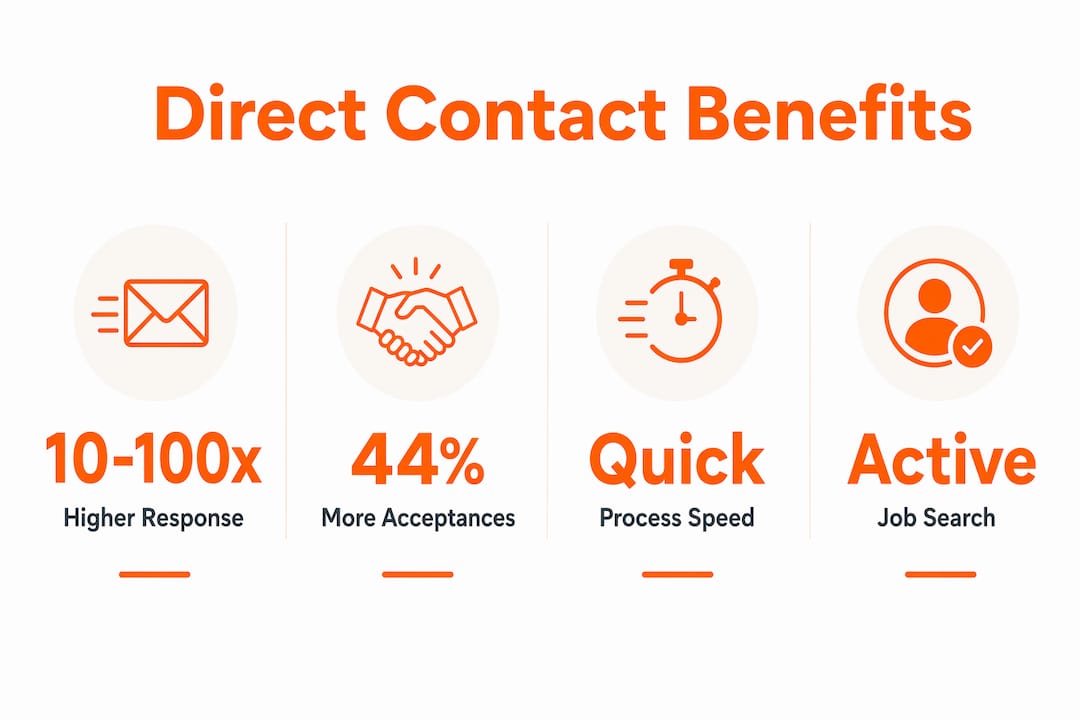
The response rate difference is significant. Cold outreach to hiring managers yields 10 to 100 times more responses than applying through portals alone. That gap exists because a direct email lands in a real inbox with minimal competition, while a portal application enters a queue of hundreds.
Personalization compounds the advantage. Personalized outreach increases acceptance rates by 44% compared to generic communications. For IT and cybersecurity roles where technical fit matters, a message that references a specific team project or recent company initiative carries real weight.
Direct outreach also shifts the job search from passive to active. Treating the process as intentional networking with targeted outreach yields more interviews than mass applying through job boards.
How to identify and reach the right hiring manager
Finding the correct contact is the first step. Generic HR inboxes produce no results.
- LinkedIn filtering: Go to the company's LinkedIn page, click "People," and filter by department. Look for titles like "Head of," "Director of," or "VP of" for the relevant function. For larger organizations, look one level below the department head.
- Company websites: Team pages, engineering blogs, and press contacts often surface names that LinkedIn does not.
- Job posting clues: Some postings name the hiring contact directly or reference the team lead the role reports to.
- Email pattern discovery: Most companies use a standard format such as firstname.lastname@company.com. One verified address from a press release or speaker bio reveals the pattern for the entire domain.
- Email verification tools: Tools like Hunter.io and Snov.io include built-in verification. Email verification before sending is critical to preserve sender domain reputation and avoid spam filtering.
Once the contact is confirmed, the outreach message itself should be concise. Keep it to 100–150 words. Lead with something specific about the team or a recent company initiative. State one quantified result from your background. Close with a low-barrier ask, such as a brief call, not a request for a job offer.
Pro Tip: Target functional leaders who directly feel the pain of an unfilled role, not just anyone with "manager" in their title. An engineering director whose team is running a critical infrastructure project without a security engineer is far more motivated to respond than a general HR contact.

Timing matters as well. Send the initial email within 24–48 hours of submitting an official application. Follow up once after 5–7 days. Two follow-ups is the maximum before moving on.
Common challenges in direct outreach and how to handle them
Direct outreach produces consistent problems when candidates skip basic verification steps or misread company policies.
- Bounced emails: Sending to an unverified address damages your sender domain reputation, causing future legitimate emails to land in spam. Always verify before sending.
- Generic inbox targeting: Most direct outreach failures result from contacting generic emails like "careers@" or "info@," where messages are lost or ignored entirely.
- No response: Silence after two follow-ups is a signal to move on, not to send a third message. Hiring managers are busy; a non-response is not a rejection of your qualifications.
- Company policies restricting direct contact: Some job postings explicitly state "no direct emails." Respecting that instruction is not optional. Ignoring it disqualifies a candidate immediately.
- Skipping the official application: Direct outreach should supplement, not replace, submitting through the official channel when HR compliance requires it.
Pro Tip: Submit the official application first, then email the hiring manager referencing the same role. This satisfies HR compliance requirements and ensures your profile receives human attention from the person who can actually move it forward.
How Plucktalent supports IT and cybersecurity professionals
Plucktalent combines 17 years of IT and cybersecurity recruiting expertise with AI-driven tools to connect candidates directly with hiring managers at companies actively filling roles. The platform addresses the core problem: most tech professionals spend time on low-success job boards rather than reaching decision-makers.
Key platform advantages include:
- Verified hiring manager contacts identified through AI-powered sourcing, not generic HR queues
- ATS-optimized profiles that perform well whether a candidate applies through a portal or reaches out directly
- Plucky AI, a dedicated job search co-pilot that guides outreach strategy and profile positioning
- Industry-specific recruiting knowledge built from 17 years of placing IT and cybersecurity talent in the United States
- Faster pipeline movement by connecting candidates to roles where active hiring signals have already been detected
For professionals who want to understand how AI identifies those signals, Plucktalent's analysis of active hiring signals explains the methodology behind the targeting.
Examples of successful direct hiring manager contact in IT/cybersecurity jobs
Direct outreach works differently depending on the role and company size.
A cybersecurity analyst targeting a mid-size financial firm might find the Director of Information Security on LinkedIn, note a recent post about a compliance initiative, and send a 120-word email referencing that initiative alongside one specific result from a previous audit project. The message reaches the director's inbox directly, with no ATS layer between them.
A cloud infrastructure engineer pursuing a role at a Series B startup can monitor the company's LinkedIn activity for funding announcements or product launches, then reach out before a formal posting appears. Many roles at growing companies fill through direct contact before they are ever listed publicly.
In both cases, the outreach works because it is specific, brief, and sent to the right person. A message referencing a real team challenge is qualitatively different from a generic "I am interested in opportunities at your company" note.
Mistakes to avoid when contacting hiring managers directly
Several patterns consistently reduce the effectiveness of direct outreach.
- Sending to careers@ or info@ inboxes instead of a verified individual address
- Writing long emails that exceed 150 words and bury the key point
- Leading with "I am looking for a job" rather than leading with value to the hiring manager's team
- Attaching a resume on the first cold email, which increases the chance of spam filtering
- Contacting multiple people at the same company simultaneously, which creates a poor impression if they compare notes
- Following up more than twice, which signals poor judgment rather than enthusiasm
- Ignoring explicit "no direct contact" instructions in a job posting
The most common mistake is treating direct outreach as a volume play. Sending 50 generic messages produces worse results than sending 5 specific, well-researched ones.
How direct contact impacts the hiring process and timelines
Direct outreach moves the first human reviewer from a recruiter reviewing ATS output days later to the hiring manager reading an email within hours. That compression in review time changes the entire hiring timeline for both parties.
When a hiring manager receives a relevant, concise message from a qualified candidate, the internal process often accelerates. The manager can flag the candidate to HR, schedule a screening call, or forward the profile directly, all before the candidate's portal application has been reviewed by anyone. For IT and cybersecurity roles where unfilled positions carry operational risk, that speed benefits the employer as much as the candidate.
Direct contact also creates a record of initiative. Even when a candidate is not selected for a current role, the hiring manager may recall the outreach for a future opening or refer the candidate to a colleague.
Plucktalent connects you directly to the decision-makers
Plucktalent is built for IT and cybersecurity professionals who want to stop waiting in the ATS queue and start reaching the people who make hiring decisions. The platform's AI tools identify verified hiring manager contacts at companies with active openings, so outreach goes to the right person from the start. Profiles are optimized for both ATS parsing and human review, covering both channels without extra effort.
For professionals ready to move from passive applications to direct, targeted outreach, Plucktalent's job seeker platform provides the contacts, the tools, and the 17-year recruiting expertise to make that shift. Visit Plucktalent to get started.
Key Takeaways
Direct hiring manager contact, combined with a verified email and a concise, role-specific message, produces measurably better results than portal applications alone for IT and cybersecurity job seekers.
| Point | Details |
|---|---|
| Response rate advantage | Cold outreach to hiring managers yields 10 to 100 times more responses than portal applications. |
| Hiring likelihood | Sourced candidates are 5 times more likely to be hired than inbound applicants. |
| Personalization impact | Personalized outreach increases acceptance rates by 44% compared to generic messages. |
| Coordinated approach | Submit the official application first, then email the hiring manager to satisfy compliance and gain human attention. |
| Plucktalent | The platform connects IT and cybersecurity professionals to verified hiring managers using AI-driven sourcing and 17 years of recruiting expertise. |
FAQ
What is direct hiring manager contact?
Direct hiring manager contact is the practice of reaching out personally to the decision-maker responsible for a specific role, bypassing ATS filters and generic HR inboxes to place your profile directly in front of the person who controls the hiring decision.
Is it acceptable to email a hiring manager directly?
Yes, in most cases. Unless the job posting explicitly states "no direct contact," sending a brief, professional email after submitting an official application is generally appropriate and demonstrates initiative.
How do you find a hiring manager's email address?
Use LinkedIn to identify the correct person by department and title, then infer the email format from the company domain. Verify the address with a tool like Hunter.io or Snov.io before sending to protect your sender reputation.
How many follow-up messages should you send?
Send one follow-up after 5–7 days. A second follow-up is acceptable after another 7–10 days. After two attempts with no response, move on to other opportunities.
How does Plucktalent help with direct hiring manager contact?
Plucktalent uses AI-powered sourcing to identify verified hiring manager contacts at companies actively hiring IT and cybersecurity talent, and optimizes candidate profiles for both ATS review and direct human outreach.