
The fastest way to improve your job search results is not posting more. It's narrowing your focus to one specific technical identity, then publishing one deep, well-researched technical article regularly. Practitioner analysis on building a personal brand online backs this up directly: fewer, higher-signal pieces beat frequent shallow posts almost every time.
Here's the 3-step version:
- Clarify your niche. Pick one Technical North Star, a specific technology, industry, and problem you solve better than most.
- Publish proof of work. One deep article, case study, or project writeup per month, hosted somewhere permanent.
- Optimize your home base. Make LinkedIn and GitHub reflect that same North Star, word for word.
Your 7-day starting checklist:
- Day 1 to 2: Audit your LinkedIn headline, About section, and GitHub pins against your actual target role.
- Day 3: Pick your first article topic. It should solve a real problem you've personally hit.
- Day 4 to 6: Draft and publish it on your personal site or Dev.to.
- Day 7: Pin it. Share it once on LinkedIn, once on X.
Pro Tip: Write your Personal Value Proposition as one sentence: "I help [audience] solve [problem] using [specific method or stack]." If you can't fill in all three blanks specifically, your brand is still too broad.
Key Takeaways
A narrow Technical North Star combined with one deep, monthly technical article and Harvard-style external validation produces more hiring signal than broad, frequent posting.
| Point | Details |
|---|---|
| Define your North Star | Narrow to one specific technology, audience, and problem before creating any content. |
| Validate externally | Ask three authorities, three peers, and three reports how they'd describe your strongest skill. |
| Publish monthly, not daily | One deep technical article per month outperforms frequent shallow posts for hiring signal. |
| Prove it, don't claim it | Use case studies, GitHub activity, and mentorship evidence instead of resume adjectives. |
| Accelerate distribution with Plucktalent | Plucktalent's AI-powered platform tailors your resume and connects your proven brand directly to hiring managers in IT and cybersecurity. |
Table of Contents
- What Personal Brand Best Practices for Tech Jobs Actually Mean
- How Do You Define a Technical North Star and PVP?
- How Should You Audit Your Current Online Presence?
- Which Platforms Should You Use to Build Authority?
- How Do You Build a Verifiable Track Record?
- Where Should You Network to Turn Presence into Opportunities?
- What Does the Research Say About Cadence and Positioning?
- What Mistakes Undermine a Tech Professional's Brand?
- How Do You Measure and Improve Your Personal Brand?
- Recruiter-First Perspective: An Honest Note From a Practitioner
- How Plucktalent Turns Your Brand Into Interviews Faster
- Sources
- FAQ
What Personal Brand Best Practices for Tech Jobs Actually Mean
A personal brand for a technical professional isn't a logo or a tagline. It's the combination of a clear signal (what you're known for), verifiable proof (work someone else can check), and a consistent narrative that ties the two together across every profile a recruiter might land on.
That combination changes what happens in your inbox. Three outcomes show up consistently when engineers get this right:
- More targeted inbound interviews. Recruiters searching GitHub or LinkedIn for a specific stack find you instead of generic keyword matches.
- Stronger referrals. Colleagues and former managers can describe what you do in one sentence, which makes them far more likely to vouch for you by name.
- Better negotiating leverage. A documented track record shifts the conversation from "convince me you can do this" to "let's talk about scope and compensation."
A backend engineer who wrote a single post breaking down a Kafka migration failure, including what broke and how the team fixed it, generated three inbound interview requests within two weeks. Not because it went viral. Because it was specific, verifiable, and easy to forward to a hiring manager.
Harvard Business School's personal branding framework treats this as a structured process, not a personality trait: define your purpose, audit your current brand equity, build a narrative, and validate it externally before you scale it. That last step, external validation, is the piece most tech professionals skip. It's also the one that catches blind spots no amount of solo brainstorming will surface.
How Do You Define a Technical North Star and PVP?
Most tech professionals sabotage their own branding before they write a single post, by trying to appeal to everyone. A common mistake is becoming a "generalist for hire," someone whose profile lists ten skills and stands for none of them. The fix is a Technical North Star: a specific technology, a specific industry, and a specific problem-solving philosophy, stated together.
Here's the three-stage exercise to get there.
1. Discover. List every project, skill, and audience interaction from the last two years. Look for the intersection where your strongest skill meets a problem you've solved more than once. That intersection is your candidate North Star.
2. Draft your PVP. Use this template: "I help [specific audience] achieve [specific outcome] using [specific method, tool, or stack]." Three examples by role:
- Software engineer: "I help fintech startups ship PCI-compliant payment features without slowing down their release cadence."
- Platform/infra engineer: "I help mid-size SaaS teams cut cloud spend by rearchitecting Kubernetes workloads for spot instances."
- Data specialist: "I help e-commerce teams turn messy clickstream data into forecasting models that actually inform inventory decisions."
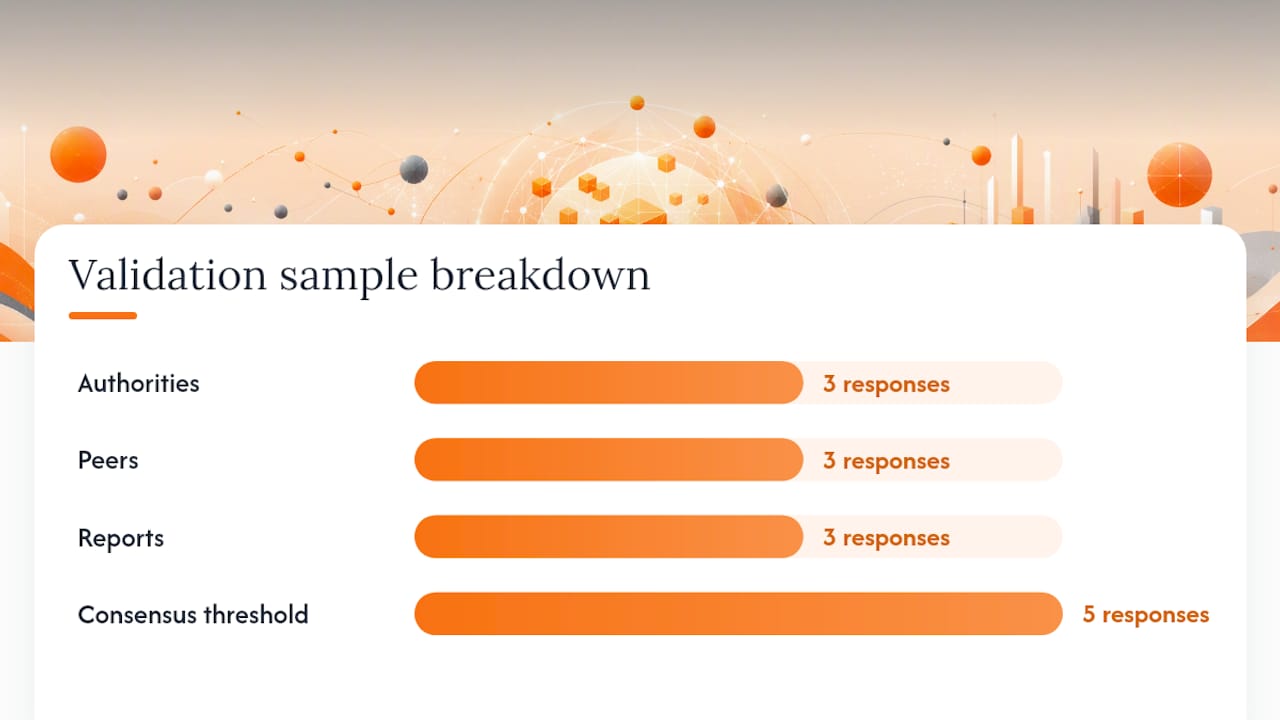
3. Validate externally. This is the step Harvard's 7-step framework centers on, and it's the one most people never do. Ask nine people, in three groups of three, how they'd describe your strengths:
- Three authorities (former managers, senior engineers who've reviewed your work).
- Three peers (colleagues at your level who work alongside you).
- Three reports or junior collaborators (people you've mentored or paired with).
Ask each of them the same two questions: "What do you think I'm best at, technically?" and "If a recruiter asked you to describe my specialty in one sentence, what would you say?" The answers rarely match your own self-description perfectly. Where they diverge from your draft PVP, trust the external pattern over your own assumption. People outside your head see your signal more clearly than you do.
Pro Tip: If five or more of your nine responses mention the same skill or trait unprompted, that's your real North Star, not the one you thought you had.
Identity-first positioning beats scattershot tactics because it makes every downstream decision easier. Once your PVP is locked, you stop wondering what to post, which conferences to attend, or which projects to highlight on GitHub. The North Star answers all of it before you have to think about it.
How Should You Audit Your Current Online Presence?
Before you publish anything new, map what already exists against your PVP. Most tech professionals have years of scattered signal: old blog posts, abandoned side projects, a LinkedIn headline written for a job they left three years ago.
Run through this inventory:
- LinkedIn headline, About section, and featured posts
- GitHub pinned repos, README quality, and contribution history
- Personal site or blog (if none exists, that's your first gap)
- Any conference talks, podcast appearances, or published articles
- Old social posts or comments that contradict your current PVP
Once you've listed everything, prioritize fixes using an impact-versus-effort lens rather than tackling things in the order you find them.
A common mismatch: someone whose PVP centers on infrastructure cost optimization still has a GitHub profile pinned to a to-do list app from a bootcamp course. That single disconnect undercuts every other signal on the page. Archive or unpin anything that doesn't support your North Star. It's not lying to hide it, it's just no longer the most relevant thing to show first. Villpress's 2026 guide makes the case that a personal site should be your canonical source of truth, since platform-owned channels like LinkedIn or X can change algorithms or disappear entirely.
Which Platforms Should You Use to Build Authority?
Different channels serve different jobs in your brand strategy, and treating them interchangeably wastes effort. LinkedIn distributes, GitHub proves, and your personal site anchors everything permanently.

| Platform | Best For | Trade-off |
|---|---|---|
| Distribution and recruiter discovery | Algorithm-dependent reach; content is rented | |
| GitHub | Verifiable technical proof | Requires ongoing maintenance to stay current |
| Personal site | Permanent, owned canonical record | Slower to build an audience organically |
| Dev.to / HashNode | Technical deep dives with a built-in developer audience | Less recruiter visibility than LinkedIn |
| Medium / Substack | Long-form narrative and newsletter building | Paywalls and algorithm shifts affect reach |
| X (Twitter) | Real-time engagement with the developer community | High noise, low signal-to-effort ratio |
The recommended cadence, backed by practitioner guidance on software engineer branding, is one deep technical article per month, supplemented by two to three deep pieces per year that go even further, plus weekly short-form items that repurpose the long-form work.
Here's a repurposing plan for a single long-form article:
- Write the full piece on your personal site or blog first. This is your canonical version.
- Cross-post the full text to Dev.to or HashNode for developer audience reach.
- Extract three to five key insights into a LinkedIn post with a link back to the full article.
- Turn the sharpest insight into a short thread on X.
- If the topic holds up, pitch it as a lightning talk at a local meetup six months later.
Platform-appropriateness matters more than most people think. Code walkthroughs and post-mortems belong on Dev.to or your own site, where technical readers expect depth. Case studies with business outcomes attached perform better on LinkedIn, where hiring managers and non-technical stakeholders are also scrolling. Quick tips and hot takes belong on X, where the format rewards brevity over depth. Shopify's guide to personal branding frames this as a flywheel: short-form content drives discovery, long-form owned content builds depth, and the two compound each other over time when you keep the flow moving between them.
Avoid publishing the same unedited text everywhere. A LinkedIn post that's just a copy-pasted blog intro reads as lazy distribution, not strategy.
How Do You Build a Verifiable Track Record?
Recruiters can't verify claims. They can verify evidence. That distinction is why case studies, GitHub activity, and documented contributions carry more weight than a resume bullet that says "improved system performance."
Structure your case studies using a S.T.A.R. format with numbers attached wherever possible: Situation (what was broken or needed), Task (what you were responsible for), Action (what you actually did, technically), and Result (the measurable outcome, plus what you'd do differently next time). That last piece, an honest lesson learned, signals maturity that a purely positive result never does.
Your GitHub profile needs the same scrutiny as your resume:
- Pin three to five repos that represent your actual best work, not your oldest projects.
- Write READMEs that explain the problem the project solves, not just installation steps.
- Keep commit history active and meaningful; a graveyard of abandoned repos hurts more than an empty profile.
- Show CI pipelines, tests, and clean pull request discussions where possible.
Avoid what recruiters call "tutorial-salad" repos: a GitHub full of course-following clones with no original thinking visible. If your best work lives inside a company's private repo, convert it into a public case study instead. Strip proprietary details, keep the architecture decisions and outcomes, and publish it as a writeup. Open-source contribution is one of the highest-signal activities available precisely because merged pull requests are permanent and checkable by anyone.
Endorsements and recommendations round this out. A specific, detailed LinkedIn recommendation from a former manager who names a real project outweighs a dozen generic skill endorsements.
Pro Tip: Ask for recommendations right after finishing a project together, while the details are still fresh. A recommendation written six months later is always vaguer than one written the week the work shipped.
Where Should You Network to Turn Presence into Opportunities?
Visibility without relationships rarely converts into offers. The professionals who land interviews through their brand almost always combine content with real conversations in the right rooms.
High-value places to show up:
- Technology-specific Discord and Slack communities tied to your stack
- Local meetups in your city, even small ones with 20 to 30 attendees
- Industry conferences, whether you're speaking or just attending
- Niche subreddits or forums where practitioners discuss real problems, not marketing content
A simple outreach script for an informational interview: "I've been following your work on [specific project]. I'm exploring [your North Star topic] and would love 15 minutes to hear how you approached [specific challenge]." Follow up once, one week later, if you don't hear back. Don't follow up a second time.
To convert engagement into referrals:
- Help first. Answer questions in community channels before you ever ask for anything.
- Track every meaningful contact in a simple spreadsheet, not just your memory.
- Follow up quarterly with a genuine update, not a favor request.
Speaking at meetups, contributing to open source, and mentoring junior engineers all multiply credibility faster than posting alone. Signals like mentorship and post-mortem writing are exactly what separates candidates being considered for staff-plus roles from those still competing on code output alone.
What Does the Research Say About Cadence and Positioning?
The advice to slow down and go deep isn't intuition, it shows up consistently across practitioner research. The core insight worth internalizing:
A tightly focused Technical North Star, validated through structured external feedback, produces more durable career signal than broad, high-frequency posting. Publishing one deep technical article per month, rather than daily shallow updates, is repeatedly identified as the higher-leverage cadence for engineers building a discoverable reputation.
Why does external validation matter so much? Because self-assessment is unreliable. The Harvard 7-step framework exists specifically because people consistently misjudge their own strongest signal. The 3x3 structure, three authorities, three peers, three reports, forces you to collect outside data before you commit months of writing to the wrong niche.
A sample 3-month plan that ties output to hiring outcomes:
- Month 1: Finalize PVP, run the 3x3 validation, publish first deep article, clean up LinkedIn and GitHub.
- Month 2: Publish second article, attend two community events, request two recommendations from recent collaborators.
- Month 3: Publish third article, track inbound messages and interview requests, adjust PVP based on which topics generated the strongest response.
This guide draws on 17 years of recruiting experience inside IT and cybersecurity hiring, where the pattern above shows up again and again: candidates with a narrow, provable specialty move through pipelines faster than generalists with longer resumes.
What Mistakes Undermine a Tech Professional's Brand?
The most common failure isn't lack of effort, it's misdirected effort. A few patterns show up repeatedly:
- Being too broad. Listing ten skills instead of owning one. Fix: narrow to your Technical North Star and say no to content outside it.
- Posting low-value noise. Sharing generic career advice everyone else is also posting. Fix: publish one deep, original piece instead of five shallow ones.
- Faking expertise. Claiming authority on topics you haven't actually worked in. Fix: write about what you're currently learning, transparently, instead of pretending mastery.
- Inconsistent signals. A LinkedIn headline that contradicts your GitHub pins or personal site. Fix: audit all three quarterly and align the language across each.
A low-signal fix looks like deleting a vague "passionate about tech" bio. A high-signal fix replaces it with your one-sentence PVP, word for word, across every profile.
How Do You Measure and Improve Your Personal Brand?
Track a small set of numbers that actually connect to career outcomes, not vanity metrics like follower count:
- Profile views on LinkedIn and GitHub, tracked monthly.
- Inbound messages specifically from people at target companies.
- Interview invitations that mention your content or profile directly.
- GitHub stars, forks, or merged pull requests on your public work.
- Referral requests from people who found you through your brand, not a mutual connection.
Review these quarterly, not weekly. Short-term fluctuation is normal and rarely means anything.
- If inbound messages are flat after two quarters, your PVP may be too vague or your content isn't reaching the right audience.
- If interview invitations increase but for the wrong roles, your signal is attracting the wrong target companies.
- If your audience or goals shift, most because you're pivoting roles, revisit your PVP rather than forcing old content to fit a new direction.
Recruiter-First Perspective: An Honest Note From a Practitioner
Most branding advice is written by marketers, not by people who actually read hundreds of technical profiles a week deciding who gets a callback. From that vantage point, the signals that predict hireability are boring and consistent: a clear, narrow specialty, a case study with a real number attached, and evidence someone else trusted this person with responsibility, whether that's mentoring a junior engineer or owning a production incident.
What surprises people is how rarely candidates show mentorship. Everyone lists their tech stack. Almost nobody mentions that they onboarded three junior developers or wrote the postmortem the whole team still references. That single addition to a profile does more for a hiring manager's confidence than another certification ever will.
How Plucktalent Turns Your Brand Into Interviews Faster
A strong personal brand gets you noticed. It doesn't guarantee your resume reaches the right hiring manager, or that your GitHub proof-of-work ever gets seen by the person actually making the decision. That's the gap Plucktalent closes for IT and cybersecurity professionals specifically.
Instead of sending your carefully built case studies into a generic applicant tracking system and hoping, Plucktalent's AI-powered platform tailors your resume and profile to match how hiring managers in your specialty actually search, then connects you directly with the people hiring for roles matching your Technical North Star. It's built to work alongside the brand you've spent months building, not replace it. Your PVP, your GitHub proof, your case studies, all of that authenticity still does the heavy lifting; the platform just gets it in front of the right eyes faster than cold applications ever will. If you've already done the work outlined above, the next step is putting it to use. Visit the Job Seekers page to see how Plucktalent matches your profile to hidden roles in IT and cybersecurity.
Sources
- Personal Branding at Work (HBS Online blog)
- Digital strategies for success: building a personal brand online (LSOnline / UPenn)
- Personal Branding for Software Engineers (Ruchit Suthar)
- Harvard 7-step personal branding framework (YouRefactor)
- How to Build a Personal Brand in Tech in 2026 (Villpress)
FAQ
What are the 5 C's of personal branding?
Definitions vary across sources, but a common version includes Clarity, Consistency, Constancy, Content, and Community, all centered on presenting a recognizable, repeated signal across platforms.
What is the 3-7-27 rule of branding?
This isn't a widely documented framework in personal branding research; treat any specific claim about it with caution and focus instead on the tested cadence of one deep article per month backed by practitioner research.
What are the 7 pillars of personal branding?
Most frameworks, including Harvard's identity-first model, group personal branding around purpose, authenticity, consistency, visibility, verifiable proof, community, and continual reassessment through external feedback.
What are the 5 P's of personal branding?
Common versions cite Purpose, Positioning, Persona, Performance, and Promotion, though the exact list shifts by source; the core idea, defining a clear identity before promoting it, matches the Technical North Star approach covered above.
How do I write a 30-second elevator pitch for tech interviews?
Use your PVP directly: "I help [audience] achieve [outcome] using [method or stack]," then add one specific recent example to make it concrete in under 30 seconds.
Can an AI tool help me apply my personal brand to job applications?
Yes. A platform like Plucktalent can tailor your resume and profile language to match specific hiring managers' searches, but the underlying brand, your North Star, proof of work, and narrative, still needs to be genuinely yours.