
A career coach is a professional who partners with an individual to clarify professional goals and build a concrete action plan for reaching them. According to Coursera, typical duties include skills assessments, resume and LinkedIn optimization, mock interviews, and personalized career action plans. The role is distinct from therapy, mentoring, or recruiting. It is structured, goal-oriented, and client-driven.
Core duties at a glance:
- Conducting skills and values assessments
- Optimizing resumes, LinkedIn profiles, and professional branding
- Running mock interviews and offer negotiation preparation
- Building career roadmaps and accountability structures
- Facilitating career pivots and transition planning
Typical client outcomes:
- Clearer direction on career goals and next steps
- Faster movement from application to offer
- Stronger negotiation results and improved interview performance
The International Coaching Federation (ICF) sets practice standards and credential benchmarks that clients can use when evaluating coaches. Platforms like Plucktalent, which combines 17 years of IT recruiting expertise with AI-driven job search tools, represent a complementary path for professionals who want to pair coaching strategy with direct access to hiring managers.
Key Takeaways
A career coach partners with an individual to clarify goals, build an action plan, and develop the decision-making skills that persist well beyond the engagement itself.
| Point | Details |
|---|---|
| Role definition | A career coach clarifies goals and builds structured action plans; they do not apply for jobs on the client's behalf. |
| Credential signals | ICF credentials, relevant industry experience, and documented client outcomes are the most reliable evaluation criteria. |
| Cost and format | Engagements range from single sessions to 3–6 month transitions; nonprofit and employer-funded options can reduce cost. |
| Outcomes timeline | Interview skills improve in 2–4 weeks; a full career pivot typically takes 3–6 months with active effort. |
| Plucktalent | Pairs coaching strategy with AI-driven role discovery and ATS-optimized profiles for IT and cybersecurity professionals. |
Table of Contents
- What does a career coach do day-to-day?
- How the career coaching process works
- Types of career coaches and when to hire each
- What qualifications and skills should you look for in a career coach?
- How much does a career coach cost?
- How to choose a career coach
- What outcomes can you realistically expect from career coaching?
- How does a career coach differ from a counselor, mentor, or recruiter?
- How AI job-search tools and coaching work together
- An editorial perspective on the real value of career coaching
- Plucktalent complements career coaching for IT and cybersecurity professionals
- Sources
- FAQ
What does a career coach do day-to-day?
Career coach responsibilities span a wide range of session-level tasks, depending on the client's stage and setting. The NACDD career coach job description lists one-on-one coaching, strengths and interest assessments, individualized action plans, resume and interview support, and facilitation of group workshops as standard duties.
Common session-level tasks include:
- Reviewing and rewriting resume sections or LinkedIn summaries
- Conducting mock interviews with structured feedback
- Mapping out a 30/60/90-day job search plan
- Identifying skill gaps and recommending specific training resources
- Preparing clients for salary and offer negotiations
- Tracking application activity and adjusting strategy based on results
A typical coaching session might open with a progress check on the previous week's action items, move into a focused skill-building exercise (such as a mock behavioral interview), and close with a specific assignment for the following week.
Duties shift by setting. In nonprofit workforce development programs, coaches often guide participants through job-readiness workshops and connect them with employer networks, as described in OIC Philadelphia's workforce development coach job description. Corporate outplacement coaches focus on rapid reemployment and severance-period support. Independent coaches tend to offer more customized, longer-term engagements. Coaches generally do not apply for jobs on behalf of clients; as Forbes notes, the client executes the applications and interviews while the coach improves technique and strategy.
How the career coaching process works
Codecademy's career coaching resource describes coaching as a structured process built around accountability and decision-making. The goal is not to tell a client which job to take. It is to sharpen how the client thinks and acts so they can make better choices independently.
A standard engagement follows these steps:
- Intake and assessment. The coach gathers background on the client's experience, goals, values, and obstacles; this often includes a formal skills or personality assessment.
- Goal setting. Coach and client define a few concrete, measurable goals for the engagement (e.g., land a senior security analyst role within a specified timeframe).
- Action plan development. The coach builds a step-by-step plan with milestones, deadlines, and accountability checkpoints.
- Recurring sessions. Sessions run 45–60 minutes, typically weekly or biweekly, covering progress, skill-building, and strategy adjustments.
- Follow-up and accountability. Between sessions, the client completes assigned tasks. The coach reviews progress and recalibrates the plan as needed.
Timeline examples: A focused job-search sprint runs several weeks and suits someone who is interview-ready but needs targeting and messaging help. A full career transition engagement typically spans a few months and covers exploration, rebranding, skill-building, and active search.
Pro Tip: Before your first session, write down three specific outcomes you want from coaching and one obstacle you have not been able to solve on your own. Coaches move faster when clients arrive with defined problems rather than open-ended questions.
Types of career coaches and when to hire each
Not every coach fits every situation. The right type depends on career stage, industry, and the specific problem to solve.
- Early-career / new-grad coach. Helps recent graduates translate academic experience into professional positioning. Best for first-job seekers or those within two years of graduation.
- Career transition coach. Specializes in industry or function changes. Useful when a professional wants to move from one field to another and needs help reframing transferable skills.
- Executive / leadership coach. Focuses on advancement to senior or C-suite roles, leadership presence, and stakeholder management. Relevant for mid-to-senior professionals targeting director-level positions and above.
- Industry- or function-specific coach. Brings direct experience in a target field, such as IT, cybersecurity, healthcare, or finance. Valuable when technical credibility and insider knowledge of hiring norms matter.
- Outplacement / workforce development coach. Often employer-funded or nonprofit-funded. Designed for professionals navigating layoffs or workforce re-entry.
- Resume and personal branding specialist. Concentrates on written materials and digital presence rather than broader career strategy. A good fit for someone whose strategy is clear but whose materials are not landing interviews.
What qualifications and skills should you look for in a career coach?
There is no single required license to practice as a career coach in the United States. Emory University's Career and Professional Development blog notes that coaches come from HR, recruitment, counseling, and industry backgrounds, and that background alignment with the client's goals matters more than any single credential.
Credentials worth evaluating:
- ICF credentials (ACC, PCC, MCC): Issued by the International Coaching Federation, these signal formal coach training and adherence to ethical practice standards.
- Counseling or psychology degrees: Relevant for coaches working with clients facing career-related anxiety or major life transitions.
- HR or recruiting backgrounds: Useful for clients focused on hiring processes, compensation benchmarking, or ATS navigation.
- Direct industry experience: A former cybersecurity hiring manager coaching IT professionals brings context no certification replicates.
Practical hiring signals:
- Documented client outcomes or anonymized case studies
- A clear, written description of their coaching process
- Willingness to offer a trial session or introductory call
- Testimonials from clients in a similar role or industry
Red flags to avoid:
- Guarantees of job placement or specific salary increases
- No visible process, methodology, or sample materials
- Pressure to commit to a long package before a discovery call
- Credentials that cannot be verified through the issuing body
How much does a career coach cost?
Career coach pricing in the United States varies by experience, specialization, and engagement format. No single standard rate applies across the market, but the following shapes are common.
Pricing models:
- Hourly rates: Single sessions typically range from $75 to $300+ per hour, depending on the coach's background and market.
- Package pricing: Most coaches bundle 4–8 sessions into a fixed-price package. This is the most common format for job-search sprints.
- Monthly retainers: Ongoing coaching relationships often use a flat monthly fee covering a set number of sessions and between-session support.
- Sliding-scale and nonprofit-funded coaching: University career centers, workforce development programs, and some nonprofit organizations offer coaching at reduced or no cost.
Engagement formats:
- Single session (one-time strategy or resume review)
- Short sprint (4–6 weeks, focused on active job search)
- Transition coaching (3–6 months, covering exploration through offer acceptance)
- On-demand or ad-hoc sessions (as-needed support without a fixed cadence)
Cost-reduction options: Many employers include coaching through employee assistance programs or professional development budgets. University alumni career centers often provide free or low-cost sessions to graduates. Group coaching programs offer peer accountability at a fraction of individual coaching rates.
National Skills Coalition reports that 92% of jobs now require digital skills, which has increased demand for coaches who can advise on upskilling and technical positioning, particularly in IT and cybersecurity fields.
How to choose a career coach
Selecting a coach is a screening process, not a purchase decision. The criteria below apply regardless of specialization.
Selection checklist:
- Clear process: the coach can describe what happens in sessions and between them
- Relevant experience: background matches your industry, level, or transition type
- Evidence of outcomes: client results, case studies, or testimonials are available
- Communication fit: response time, style, and availability align with your needs
- Transparent pricing: costs and commitment terms are stated upfront
Questions to ask a prospective coach:
- What does your typical engagement look like from start to finish?
- How do you measure progress and success with clients?
- Can you describe a client situation similar to mine and what happened?
- What do you expect from clients between sessions?
- How do you handle it when a client is not making progress?
- What is your background, and how does it apply to my goals?
- Do you offer a trial session or introductory call before committing?
- How do you stay current with hiring trends in my target field?
- What tools or assessments do you use, and why?
- What is your refund or cancellation policy?
Red flags in the screening process: A coach who cannot describe their process, avoids questions about past client outcomes, or pushes for a long-term commitment before a discovery call is worth skipping.
Pro Tip: Book a single paid session with two or three coaches before committing to a package. The quality of feedback in that first session tells you more than any marketing page.
What outcomes can you realistically expect from career coaching?
Career coaching benefits are real, but they depend on client effort as much as coach quality. The following outcomes are commonly reported across coaching engagements.
Typical benefits:
- Greater clarity on career direction and decision criteria
- A written, prioritized job search plan with specific targets
- Measurable improvement in interview performance after 2–4 weeks of mock practice
- Stronger professional materials (resume, LinkedIn, cover letter)
- Increased confidence in salary and offer negotiations
- A repeatable process for evaluating future career decisions
Realistic timelines:
- Improved interview skills: 2–4 weeks of structured practice
- Resume and LinkedIn overhaul: 1–2 weeks with active collaboration
- Career pivot from plan to first offer: 3–6 months, depending on industry and role level
- Executive transition: 6–12 months for senior-level searches
Metrics to track: Number of first-round interviews per month, application-to-interview conversion rate, offer count, salary delta between current and new role, and subjective confidence rating before and after mock interviews.
Coaching is not only for professionals who are stuck. Codecademy's coaching resource notes it is highly effective for those who want to accelerate progress, gain clarity on complex choices, or build a repeatable professional strategy.
How does a career coach differ from a counselor, mentor, or recruiter?
The terms overlap in casual use, but the roles have distinct functions, funding structures, and loyalties.
- Career coach vs. career counselor: Counselors often hold licensed clinical credentials and may address psychological barriers to career progress. Coaches focus on goal-setting, strategy, and accountability without a clinical framework. Emory University's CPD blog notes the terms are sometimes used interchangeably, but the backgrounds differ.
- Career coach vs. mentor: A mentor shares personal experience and advice from within a field. A coach uses structured methods to help the client develop their own answers. Mentors are typically unpaid peers or senior colleagues; coaches are paid professionals with a defined process.
- Career coach vs. recruiter: Recruiters work for employers to fill open roles. Their loyalty is to the hiring company, not the candidate. A career coach is hired by and accountable to the individual. Forbes makes this distinction explicit: the incentive structures are fundamentally different.
- Career coach vs. career advisor: "Advisor" is often used in university or nonprofit settings. The function is similar to coaching but may be more prescriptive and less process-driven.
Alternative job titles in use: Career consultant, career strategist, director of career development, workforce development specialist, outplacement consultant. The title varies by employer and setting; the underlying duties often overlap significantly.
How AI job-search tools and coaching work together
Gartner's survey data shows that leadership and manager development is a top priority for HR leaders, which reflects broader demand for structured career development support. Coaching and AI job-search tools address different parts of that demand.
What coaching adds vs. what AI tools add:
- Coaching: Career strategy, self-assessment, interview skill-building, accountability, and the ability to work through complex decisions with a thinking partner
- AI job-search tools: Resume ATS tailoring at scale, hidden role discovery, hiring manager contact data, and application volume without manual research overhead
A practical use-case: a professional uses a coach to clarify target roles and sharpen interview answers, then uses an AI platform to identify companies actively hiring for those roles and reach hiring managers directly. The coach handles the thinking; the tool handles the targeting.
Plucktalent combines 17 years of IT and cybersecurity recruiting expertise with Plucky AI, a job-search co-pilot that surfaces hidden roles and delivers ATS-optimized profiles directly to hiring managers. For IT and cybersecurity professionals, pairing a coach's strategic guidance with Plucktalent's role-discovery engine compresses the time between "ready to search" and "in the pipeline."
When to prioritize coaching: early in a transition, when goals are unclear, or when interview performance is the bottleneck. When to prioritize an AI tool: when the strategy is set and the problem is reach, volume, or ATS pass-through rates. For more on how AI tools fit into a tech job search, see AI tools for tech job seekers and what a job-search co-pilot does.
An editorial perspective on the real value of career coaching
Most professionals underestimate what a career coach actually does. The common assumption is that a coach helps polish a resume or rehearse interview answers. Those are real outputs, but they are not the core value.

The deeper function is decision architecture. A good coach helps a client build a repeatable framework for evaluating career choices, not just solve the immediate problem. That framework persists after the engagement ends. A client who learns how to assess a role against their own criteria, how to read a compensation package, and how to prepare for a specific type of interview panel is better equipped for every subsequent career decision.
The other underestimated variable is accountability. Most professionals know what they should do in a job search. They do not do it consistently because there is no external structure. A weekly check-in with a coach who expects specific deliverables changes that calculus. The Codecademy coaching resource frames this well: coaching builds the client's autonomy rather than creating dependence.
For IT and cybersecurity professionals specifically, the coach-plus-tool combination is worth considering. A coach who understands technical hiring norms can calibrate positioning and interview prep in ways a generalist cannot. Pairing that with a platform that surfaces IT and cybersecurity career paths and active hiring manager contacts compresses the search considerably.
The practical next step is a 30–60 minute exploratory call with one or two coaches whose backgrounds match your target role. Treat it as a screening interview, not a sales call.
Plucktalent complements career coaching for IT and cybersecurity professionals
Career coaching gives IT and cybersecurity professionals a clear strategy and stronger interview performance. The gap it does not fill is reach: knowing which companies are actively hiring for your specific skills and getting your profile in front of the right hiring manager before a role is publicly posted.
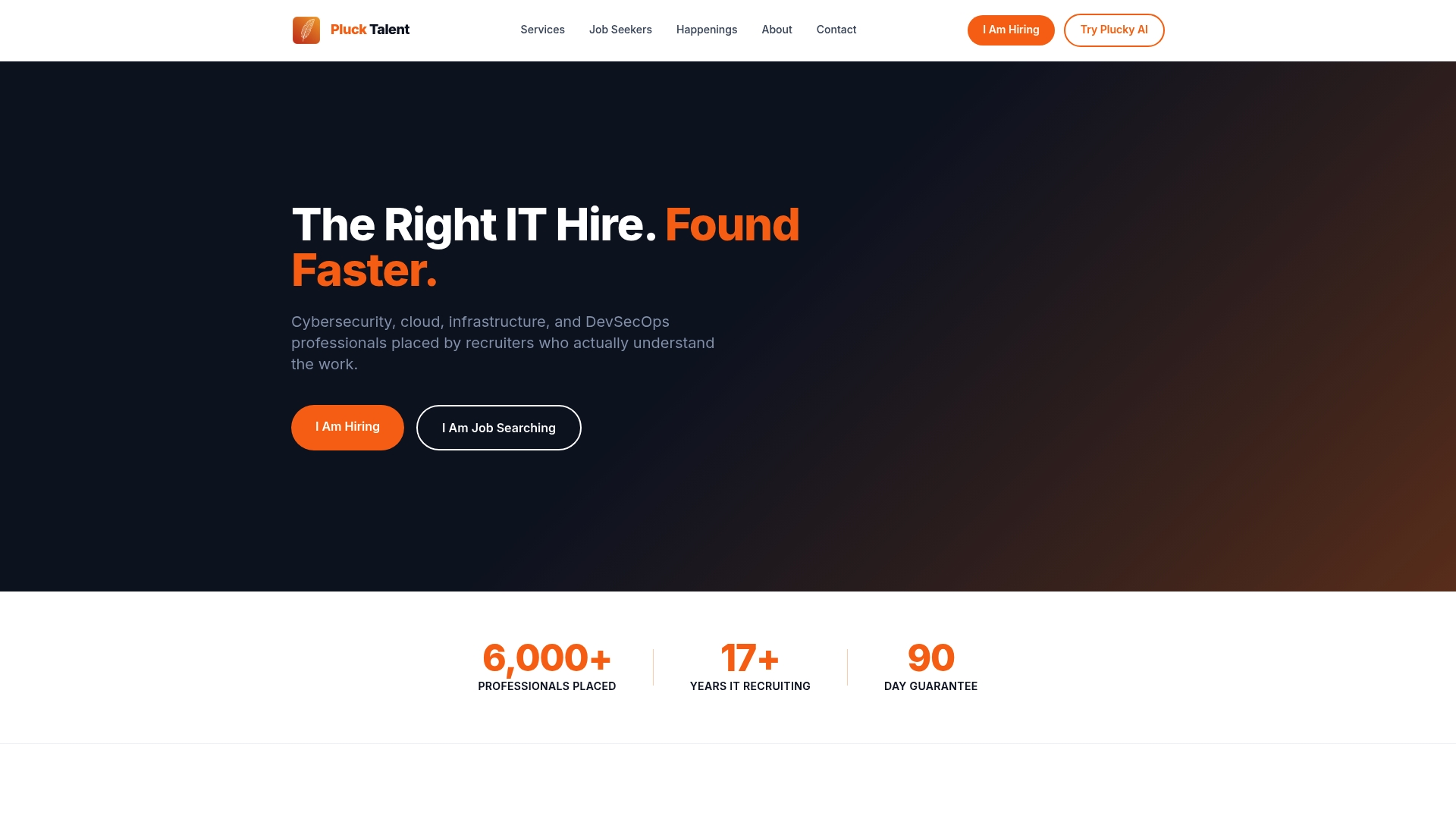
Plucktalent addresses that gap directly. The platform draws on 17 years of IT and cybersecurity recruiting expertise and Plucky AI to surface hidden roles, tailor resumes for ATS pass-through, and deliver candidate profiles to hiring managers at companies actively seeking those skills. No job board noise. No black-hole applications.
For professionals who have done the coaching work and are ready to search with precision, explore Plucktalent's job-seeker platform to see how the AI co-pilot fits your search.
Sources
The following references were used in preparing this article. Each is publicly available and covers a distinct aspect of the career coaching role.
- What Is a Career Coach? What They Do and How to Find One to Fit Your Needs | Coursera
- What Is a Career Coach and Do I Need One? – Career and Professional Development | Emory University
- Career Coach Job Description (Updated 2026 With Examples) | NACDD
- Gartner survey finds leader and manager development tops HR leaders' list | Gartner
- Coachingfederation
FAQ
What are the main duties of a career coach?
A career coach conducts skills assessments, optimizes resumes and LinkedIn profiles, runs mock interviews, builds career action plans, and provides accountability between sessions. Coaches do not apply for jobs on behalf of clients.
How much should I expect to pay for a career coach?
Hourly rates in the U.S. vary widely depending on experience and specialization. Package engagements typically bundle multiple sessions; nonprofit and employer-funded options may offer reduced or no-cost coaching.
What is the difference between a career coach and a career counselor?
A career counselor often holds licensed clinical credentials and may address psychological barriers alongside career planning. A career coach focuses on goal-setting, strategy, and accountability without a clinical framework, though the titles are sometimes used interchangeably.
What is another name for a career coach?
Common alternative titles include career consultant, career advisor, career strategist, and outplacement consultant. In university and nonprofit settings, "career advisor" is the most frequently used equivalent.
Do I need a career coach if I already use AI job-search tools?
AI tools handle resume tailoring, role discovery, and ATS optimization at scale, but they do not replace the strategic thinking, interview skill-building, and accountability that coaching provides. The two work best in combination: coaching sets the strategy, and tools like Plucktalent execute the targeting.